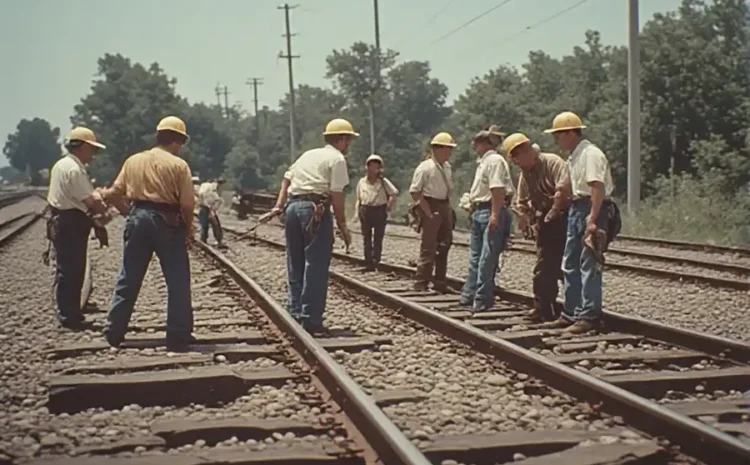
For decades, railroad workers helped keep America’s freight and passenger systems moving.
Machinists repaired locomotives.
Boilermakers worked around engines and piping.
Electricians serviced equipment.
Carmen repaired railcars.
Pipefitters worked around insulation and gaskets.
Maintenance crews replaced brakes, repaired mechanical systems, and worked inside roundhouses, shops, yards, and other railroad facilities.
Many of those workers may never have realized that materials around them contained asbestos.
Today, decades after their railroad careers ended, some former employees are being diagnosed with mesothelioma, lung cancer, asbestosis, and other illnesses that may be associated with past asbestos exposure.
For retired workers and their families searching for information about Railroad Asbestos Claims, one of the biggest questions is often:
Could my years working for the railroad have exposed me to asbestos, and do I have a potential claim?
Sammons & Berry, P.C. has represented railroad employees in asbestos-related matters for more than 30 years. The firm focuses on helping former railroad workers and their families investigate historical exposure and determine whether compensation options may be available based on their individual circumstances.
If you worked for a railroad years ago and have since developed an asbestos-related disease, your employment history may be more important than you realize.
What Are Railroad Asbestos Claims?
Railroad Asbestos Claims involve potential compensation claims connected to asbestos exposure that occurred while a person worked in the railroad industry.
Railroad equipment and facilities historically used heat-resistant and insulating products in environments where workers could be exposed when materials were cut, sanded, removed, repaired, replaced, or otherwise disturbed.
The problem with asbestos is that the dangerous fibers can be microscopic.
A worker did not necessarily need to see clouds of dust or know the word “asbestos” to have potentially been exposed.
Years later, questions can arise about:
- Where the employee worked
- Which railroad employed the worker
- Job titles
- Work locations
- Years of employment
- Types of locomotives or railcars serviced
- Materials handled
- Repair and maintenance duties
- Coworkers who performed dusty work nearby
- Medical diagnosis
- Asbestos-containing products associated with the work
- Other occupational exposure
Sammons & Berry provides additional information about these potential compensation avenues on its Railroad Asbestos Claims page.
Not every railroad employee automatically qualifies for an asbestos claim.
Each situation requires an individualized review of work history, diagnosis, possible product exposure, and available legal or trust-related options.
Why Were Railroad Workers Potentially Exposed to Asbestos?
Asbestos was historically valued because it could resist heat and fire.
Those characteristics made it useful in industries involving engines, friction, high temperatures, steam systems, electrical components, and industrial equipment.
Railroads contained many of those environments.
Depending on the railroad, time period, occupation, and equipment involved, asbestos-containing materials could potentially have been encountered in or around components such as:
- Brake materials
- Gaskets
- Pipe insulation
- Locomotive insulation
- Boiler insulation
- Electrical components
- Heat-resistant materials
- Industrial packing
- Building insulation
- Repair-shop materials
The greatest exposure concern often arose when asbestos-containing products were disturbed.
Cutting.
Grinding.
Removing.
Replacing.
Scraping.
Sanding.
Tearing out old insulation.
All of these activities could potentially release fibers into the surrounding work area.
And the employee performing the task may not have been the only person exposed.
Someone working nearby could also breathe contaminated dust.
Which Railroad Jobs May Have Involved Asbestos Exposure?
Exposure depended on actual work conditions rather than a job title alone.
However, railroad employees who performed maintenance, mechanical, repair, and shop work may have had more opportunities for contact with older asbestos-containing materials.
Potential occupations can include:
- Machinists
- Boilermakers
- Carmen
- Pipefitters
- Electricians
- Mechanics
- Maintenance workers
- Engine-shop employees
- Roundhouse workers
- Brake repair workers
- Locomotive repair personnel
- Railcar repair personnel
- Shop laborers
- Other railroad trades
A worker might also have been exposed without personally handling asbestos.
Imagine a machinist working several feet away while another employee removes old insulation.
Or a railroad employee sharing an enclosed shop with workers servicing brake components.
Or a maintenance worker repeatedly entering areas where old insulated piping was being repaired.
Asbestos exposure can involve the work environment as well as the specific task being performed.
Former workers who want to better understand how railroad employment may have created exposure can review Sammons & Berry’s information regarding Occupational Asbestos Exposure.
Why Can Railroad Asbestos Disease Appear Decades Later?
One of the most difficult aspects of asbestos-related disease is the passage of time between exposure and diagnosis.
A former railroad worker may have retired years ago.
The railroad may have changed names.
The repair shop may be gone.
Former coworkers may have moved away.
Old locomotives may no longer exist.
And yet the health effects associated with asbestos exposure can emerge much later.
The National Cancer Institute’s asbestos information explains that asbestos exposure is associated with serious diseases including mesothelioma and lung cancer and that asbestos-related diseases can develop after a long latency period.
That delay can make it difficult for former railroad workers to immediately connect a diagnosis today with conditions they experienced at work decades earlier.
Someone diagnosed in retirement may initially think:
“But I haven’t worked around the railroad in 30 years.”
That gap does not necessarily rule out past occupational exposure as something worth investigating.
Mesothelioma and Railroad Asbestos Exposure
Mesothelioma is one of the diseases most strongly associated with asbestos exposure.
It affects the mesothelial tissue that lines certain organs, most commonly the lining around the lungs.
A diagnosis often leads families to start looking backward through decades of employment.
Where did the person work?
What materials were present?
Did the employee work around insulation?
Did coworkers perform dusty repairs?
Were brake materials removed nearby?
Were gaskets or pipe insulation cut or disturbed?
These historical questions can become extremely important.
A former railroad employee may remember the work clearly but never have known the names of the manufacturers that supplied particular products.
That is one reason experience investigating historical railroad exposure matters.
A law firm handling these cases may need to reconstruct working conditions using employment records, occupation history, facility information, coworker knowledge, product research, and other available evidence.
Lung Cancer and Railroad Asbestos Claims
Lung cancer can have several potential risk factors.
Asbestos exposure is one recognized occupational risk factor.
For former railroad workers, that means a lung cancer diagnosis may justify examining prior working conditions—particularly when the employee spent years in repair shops, roundhouses, locomotive facilities, or jobs where asbestos-containing materials may have been disturbed.
Smoking history does not necessarily mean previous asbestos exposure should automatically be ignored.
The medical and legal issues need to be evaluated based on the individual’s circumstances.
Former railroad workers with cancer can learn more through Sammons & Berry’s Asbestos Cancer Claims information.
The important step is not diagnosing yourself or assuming that railroad employment caused a particular disease.
The important step is discussing occupational history with qualified medical professionals and, when appropriate, having potential compensation options reviewed by attorneys familiar with railroad asbestos exposure.
What Is Asbestosis?
Not every asbestos-related condition is cancer.
Asbestosis is a chronic lung disease associated with inhalation of asbestos fibers.
The resulting lung damage can interfere with breathing and may cause symptoms such as shortness of breath and persistent respiratory difficulty.
A former railroad worker experiencing respiratory symptoms should not assume the cause.
Many conditions can produce similar symptoms.
Medical evaluation is essential.
If a physician has diagnosed an asbestos-related condition, the patient’s previous railroad employment may become an important part of evaluating potential exposure.
What If You Do Not Remember Working With Asbestos?
This is one of the most important points for former railroad workers.
You do not necessarily have to remember someone handing you a product labeled “ASBESTOS.”
Workers often knew products by what they did rather than what they contained.
You may remember:
“The brake material made a lot of dust.”
“We removed insulation from the pipes.”
“We worked on the locomotives in the roundhouse.”
“We changed gaskets.”
“We repaired old engines.”
“We cleaned the shop after other crews finished.”
“We tore insulation out during maintenance.”
Those details may be more useful than remembering a manufacturer’s name.
An experienced asbestos attorney can ask questions designed to reconstruct your working environment.
What Information Helps Evaluate a Railroad Asbestos Claim?
You do not need to assemble a perfect file before calling a lawyer.
However, certain information can be extremely helpful.
Railroad Employment History
Try to remember:
- Railroad companies
- Approximate employment dates
- Job titles
- Locations
- Shops
- Rail yards
- Roundhouses
- Departments
- Promotions or transfers
Even approximate dates can provide a starting point.
Work Duties
Think about the actual work you performed.
What did you repair?
What materials did you remove?
What equipment did you work around?
Who worked next to you?
Were dusty materials present?
Coworkers
Former coworkers may sometimes help identify workplace conditions.
You may remember names, nicknames, supervisors, foremen, or union members who worked in the same locations.
Medical Diagnosis
The type and timing of the diagnosis can be important.
Relevant records may include pathology, imaging, physician reports, treatment records, or other medical documentation.
Your attorney can explain which documents are necessary.
Military and Other Employment History
Railroad work may not have been your only potential source of asbestos exposure.
Some workers also served in the military, worked in manufacturing, construction, shipyards, power plants, refineries, or other industrial settings.
A complete occupational history can therefore be important.
How Do Railroad Asbestos Claims Work?
There is not one single process that applies to every former railroad worker.
Potential compensation avenues depend on the facts of the case.
In some situations, compensation may potentially be available through asbestos bankruptcy trusts established by companies that manufactured or supplied asbestos-containing products.
Other situations can involve different legal claims.
The correct route depends on factors including exposure evidence, diagnosed illness, products involved, employment history, jurisdiction, and the status of responsible companies.
This is why evaluating a claim should begin with investigation rather than assumptions.
The attorney needs to understand:
Who was the worker?
Where did the worker work?
When did the work occur?
What jobs did the person perform?
What asbestos-containing products might have been present?
What illness has been diagnosed?
Only then can potential compensation options be evaluated.
What Are Asbestos Trust Claims?
Many companies involved in asbestos manufacturing or distribution eventually entered bankruptcy proceedings after facing substantial asbestos liabilities.
As part of certain bankruptcy reorganizations, trusts were established to compensate qualifying people who developed asbestos-related diseases.
These trusts have their own requirements.
A claimant may need evidence involving:
- Medical diagnosis
- Exposure
- Work history
- Product identification
- Employment locations
- Applicable trust criteria
Eligibility varies.
Having worked around asbestos does not automatically mean every trust will pay a claim.
Likewise, a former railroad employee may potentially have exposure connected to more than one product or company.
That is why identifying historical exposure can be one of the most significant parts of claim preparation.
Do Railroad Asbestos Claims Always Require Going to Court?
Not necessarily.
Some asbestos-related compensation claims can be processed through administrative trust procedures rather than a courtroom trial.
Other legal options may involve litigation depending on the specific circumstances.
A consultation should help explain what paths may apply to your particular case.
Former railroad workers should be cautious about assuming that contacting an attorney automatically means preparing for a trial.
The first objective is evaluating the claim.
What If the Railroad Company No Longer Exists?
Railroad history is complicated.
Railroads merged.
Companies were acquired.
Names changed.
Facilities closed.
Operations moved.
A former worker may remember working for a railroad name that no longer appears on today’s locomotives.
That does not necessarily mean historical employment cannot be investigated.
Experienced railroad asbestos attorneys may examine corporate histories, employment records, historical facilities, product information, and other evidence to determine what exposure and compensation pathways might exist.
Do not assume that a railroad merger or closed shop automatically ends the investigation.
What If You Worked for More Than One Railroad?
That is common.
A long railroad career may involve multiple employers.
A worker might begin with one railroad, move to another, transfer locations, change crafts, or remain employed while corporate ownership changes.
When discussing your history with an attorney, include every railroad you remember.
Do not decide on your own which job was most important.
Exposure may have occurred across several periods of employment.
Can Family Members Have Asbestos Exposure?
Occupational exposure did not always remain at the worksite.
Historically, workers in heavily exposed industries could carry dust home on clothing, shoes, hair, or personal belongings.
Family members may then have experienced what is sometimes called household or secondary exposure.
A spouse who washed dusty work clothing, for example, may have repeatedly encountered fibers without ever entering a railroad facility.
Family members diagnosed with mesothelioma or another asbestos-related disease should tell their medical and legal professionals about the occupational histories of people with whom they lived.
Why Railroad Work History Matters So Much
A railroad asbestos case can be very different from a modern workplace injury.
The event may not have happened yesterday.
There may be no single accident report.
There may be no photograph showing the worker standing next to a labeled asbestos product.
Instead, the case may require reconstructing a working environment from decades ago.
The worker’s memories can therefore become extremely important.
Questions might include:
- Which locomotives did you work on?
- Did you remove brake materials?
- Did you work in a roundhouse?
- Did you work around steam piping?
- Were insulated pipes present?
- Did you replace gaskets?
- Did you see other trades removing insulation?
- Was the shop dusty?
- Were you provided respiratory protection?
- Which coworkers performed similar work?
- What years were you at that facility?
Do not worry if you cannot remember everything immediately.
One memory can lead to another.
The purpose of the consultation is to start building the history.
Why You Should Not Wait Too Long to Investigate a Claim
Asbestos-related legal matters can be subject to deadlines.
Which deadline applies can depend on the type of claim, jurisdiction, diagnosis date, exposure history, and other circumstances.
Do not assume that because the exposure occurred decades ago it is either automatically too late—or that you have unlimited time after a recent diagnosis.
Both assumptions can be dangerous.
There is also a practical reason to begin investigating promptly.
Memories fade.
Employment documents can become harder to locate.
Former coworkers may become difficult to find.
Family members who remember details may age.
Starting earlier may provide more opportunity to preserve information.
If you have received an asbestos-related diagnosis and spent part of your career working for a railroad, consider having the situation reviewed promptly.
Questions Former Railroad Workers Often Ask
Do I have to know which asbestos product exposed me?
Not necessarily before speaking with an attorney.
Many former railroad workers remember jobs, duties, shops, and equipment but do not remember product manufacturers.
Historical product investigation can be part of evaluating a claim.
What if I retired decades ago?
That does not necessarily prevent an evaluation.
Asbestos-related diseases can appear after long latency periods.
Your diagnosis date and individual circumstances are important.
What if I smoked cigarettes?
A smoking history does not automatically answer whether occupational asbestos exposure also occurred or whether a potential claim exists.
The individual’s medical history and work exposure require evaluation.
What if I only worked around asbestos occasionally?
Exposure circumstances vary widely.
Do not decide eligibility based solely on how often you personally remember handling asbestos.
Discuss your work history with an attorney familiar with occupational asbestos exposure.
What if I worked around other railroad employees who handled dusty materials?
Bystander exposure can be relevant because workers did not necessarily need to personally cut or remove an asbestos-containing product to be in the area where fibers were released.
Do I need my old railroad employment records before calling?
No.
Provide whatever information you currently have.
A lack of complete paperwork should not prevent you from starting the conversation.
Can a surviving family member investigate a claim?
Potential rights can depend on the circumstances, diagnosis, estate status, exposure history, and applicable law.
A family member should speak with an attorney rather than assuming no options remain.
How much is a railroad asbestos claim worth?
There is no responsible universal answer.
Potential compensation depends on the diagnosed disease, exposure history, qualifying asbestos products or companies, available trusts or legal claims, and other individual factors.
Any firm promising a specific amount before reviewing the case should be approached cautiously.
Why Experience With Railroad Asbestos Claims Matters
Asbestos claims already require historical investigation.
Railroad cases add another layer.
An attorney may need to understand old railroad occupations, facilities, equipment, terminology, corporate histories, and products that workers may have encountered decades ago.
A former railroad machinist should not have to spend an entire consultation teaching the law firm what a roundhouse was or explaining basic railroad shop work.
Experience with railroad employees can help the legal team ask better questions from the beginning.
Sammons & Berry, P.C. focuses on asbestos claims involving former railroad workers and has represented railroad employees in these matters for more than 30 years.
That concentrated experience can be particularly important when the exposure occurred decades ago and the worker does not remember exact product names.
What to Have Ready When You Call Sammons & Berry
You do not need a binder of records.
Start with what you know.
If possible, be ready to discuss:
Your railroad employer or employers
The years you worked
Your job titles
The cities, shops, yards, or facilities where you worked
The type of railroad work you performed
Your medical diagnosis
Approximately when you were diagnosed
Any other industrial or military work
Coworkers you remember
Family members who may know your work history
If you do have employment documents, union records, medical records, old photographs, Social Security employment history, or other information, keep them available.
But do not delay calling simply because you cannot locate every record.
A Diagnosis Today May Be Connected to Work From Decades Ago
For many former railroad workers, the hardest part of understanding asbestos exposure is the timeline.
You worked hard.
You retired.
Years passed.
Then came a respiratory problem or cancer diagnosis.
It can be difficult to imagine that work performed decades ago could still matter.
But asbestos disease is unusual because of its long latency.
That is why a complete occupational history is important.
If you worked around locomotives, brakes, gaskets, insulation, boilers, piping, repair shops, or other railroad equipment during periods when asbestos-containing products were present, that history deserves consideration when an asbestos-related disease is diagnosed.
Do not assume your doctor or attorney will automatically know every place you worked.
Tell them.
Find Out Whether You Qualify for a Railroad Asbestos Claim
If you or a loved one worked for a railroad and has been diagnosed with mesothelioma, lung cancer, asbestosis, or another potentially asbestos-related condition, now is the time to learn whether compensation options may be available.
You do not need to know the name of every product.
You do not need to remember every date.
And you do not need to determine on your own which legal or asbestos trust process may apply.
Start with your railroad work history and diagnosis.
Sammons & Berry, P.C. can review the information and help determine whether further investigation is appropriate.
See If You Qualify for a Railroad Asbestos Claim
Sammons & Berry, P.C.
Nationwide Railroad Asbestos Claims
800-519-1440
If you spent years working for the railroad and have since developed an asbestos-related illness, do not dismiss your occupational history simply because the exposure happened decades ago.
Take the first step and find out whether you may qualify for a Railroad Asbestos Claim.
This article provides general informational content and is not legal or medical advice. Eligibility, deadlines, compensation, and available legal options depend on the facts of each individual matter. Consult qualified legal and medical professionals regarding your specific circumstances.