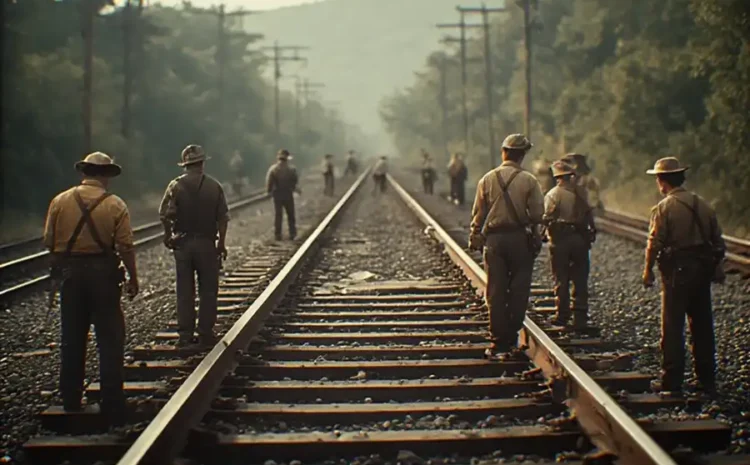
For decades, railroaders were the backbone of American industry, unknowingly breathing in a silent hazard while keeping the country moving. Historical industry data shows that asbestos—a common mineral once heavily used to fireproof train engines and brake rooms—easily breaks into microscopic, invisible needles when disturbed.
A persistent cough or shortness of breath often surfaces long after a worker’s final shift. According to medical experts, these toxic particles trigger diseases with a 40-year latency period, explaining why retirees can feel perfectly healthy for decades before suddenly facing Railroad Workers Occupational Exposure Asbestos Claims today.
Protecting your right to a safe workplace requires specialized legal tools. Rail yards operate under unique regulations, making the distinction between the Federal Employers Liability Act (FELA) and standard workers’ comp crucial. FELA is a special law that specifically protects injured railroad employees.
Identifying Asbestos in Vintage Locomotive Parts: Where the Invisible Dust Was Hidden
While most people know it was used for fireproofing, identifying asbestos in vintage locomotive parts requires looking at everyday repair work. Inside poorly ventilated roundhouses, mechanics were often surrounded by a hazard they couldn’t even see.
Some of the worst railroad machinist asbestos exposure sites involved routine maintenance on these five components:
- Brake shoes
- Boiler insulation
- Gaskets
- Steam pipe wrapping
- Wall insulation
Replacing these materials triggered severe airborne hazards. Grinding worn parts—which created severe locomotive brake shoe asbestos exposure—or tearing out old pipe wrapping released thick white powder. If you noticed dust on your clothes after a shift, you were likely inhaling millions of hazardous fibers.
Unfortunately, those airborne particles did not simply disappear when the shop closed for the night. They settled deep within workers’ lungs, setting the stage for recognizing mesothelioma symptoms decades later.
Recognizing Mesothelioma Symptoms and the 40-Year Wait for Answers
A persistent dry cough or unexpected chest pressure is often the first sign that something is wrong. Because trapped asbestos fibers can sit dormant for 30 to 40 years, doctors frequently mistake these early issues for standard age-related ailments. This massive latency period makes recognizing mesothelioma symptoms in former railroaders incredibly difficult for families seeking answers.
When medical imaging is finally ordered, specialists must distinguish between different types of internal damage. The primary difference between pleural thickening and mesothelioma lies in malignancy; the former involves painful, non-cancerous scarring of the lung’s outer lining, while the latter is an aggressive, fatal cancer.
Other veterans of the rail yard suffer from deep lung tissue scarring known as asbestosis. Pursuing asbestosis compensation for retired rail employees hinges on proving the company knew about the dust hazard but ignored it. Holding a legacy employer accountable for these medical tragedies requires navigating a specialized legal framework rather than standard workplace insurance.
FELA vs. Workers’ Comp: Requirements for Rail Claims
Most standard jobs operate under a “no-fault” system, meaning injured employees receive limited payouts regardless of who caused the harm. However, comparing the Federal Employers Liability Act vs. workers’ comp reveals a crucial difference for rail yard veterans. Since FELA is not standard insurance, the law allows for potentially much higher compensation to care for your family.
To unlock those benefits, workers must overcome a specific burden of proof by demonstrating a “safety failure.” Proving negligence in railroad occupational exposure means showing the company could have made the workplace safer but actively chose not to. The railroad’s historical knowledge of the hazard—and their choice to ignore it—is the absolute foundation of a strong case.
The FELA asbestos lawsuit process specifically looks for everyday situations where legacy employers failed to protect their crews. This negligence often took three common forms:
- Failing to provide proper respiratory masks to shop workers.
- Refusing to warn employees about the deadly nature of brake dust.
- Lacking basic ventilation systems in enclosed roundhouses.
Pinning down these exact conditions requires looking back thirty or forty years to your time on the job. Establishing that the company knowingly ignored these risks relies on historical proof, which leads directly to the challenge of locating decades-old employment records.
How to Locate Decades-Old Employment Records to Support Your Claim
Tracking down proof that you worked in a specific yard during the 1970s might feel impossible today, especially without your old pay stubs. Fortunately, learning how to find railroad employment records for claims is straightforward. The Railroad Retirement Board (RRB) maintains detailed service records for every rail worker, establishing an official timeline of your entire career.
Beyond proving where you worked, this federal agency can also validate your medical struggles. If you already applied for RRB disability benefits for lung disease, those medical findings become powerful evidence. Linking an official diagnosis of asbestos-related scarring to your verified service records builds a solid foundation for your case.
Once your history is confirmed, attorneys handling the process of filing a toxic tort against rail companies match your past jobs to historical train blueprints, proving which specific parts contained asbestos. While this secures your claim, the dust brought home on work clothes introduces another serious concern regarding secondary exposure.
Protecting the Home Front
When the shift ended, the hazard didn’t stay in the roundhouse. Microscopic fibers clung to overalls and jackets, crossing the threshold into the family home every evening. Spouses shaking out dusty clothes before doing laundry, or children hugging parents after a long trip, unknowingly inhaled these dangerous fibers, creating severe secondary exposure risks for railroad families.
Railroad law dictates that safety responsibilities shouldn’t stop at the yard gates. Companies had a strict duty to keep toxic dust in the shop, yet most failed to provide mandatory changing rooms or onsite laundry services. Because of this failure, spouses and children diagnosed with asbestos-related illnesses have their own legal standing to seek justice and hold these corporations accountable.
Determining the average settlement for railroad lung cancer cases often depends on documenting this exact timeline of secondhand exposure.
3-Step Action Plan: Securing Benefits Before Filing Deadlines Pass
A lingering illness might be a legacy of your time on the railroad. Protecting your family’s future requires transforming this knowledge into documented action.
If you suspect an asbestos-related illness, follow these three immediate steps to secure your rights:
- Consult a specialist for proper medical screening and diagnosis.
- Secure service records to verify your railroad employment history.
- Contact a FELA attorney at Sammons & Berry Law Firm.
Do not wait, as the statute of limitations for rail worker lawsuits creates strict three-year filing deadlines. Check your qualification for compensation today at https://railroadasbestosclaims.com/qualify.
See if you qualify for compensation
Sammons & Berry, P.C.
800-519-1440
View our Google Listing