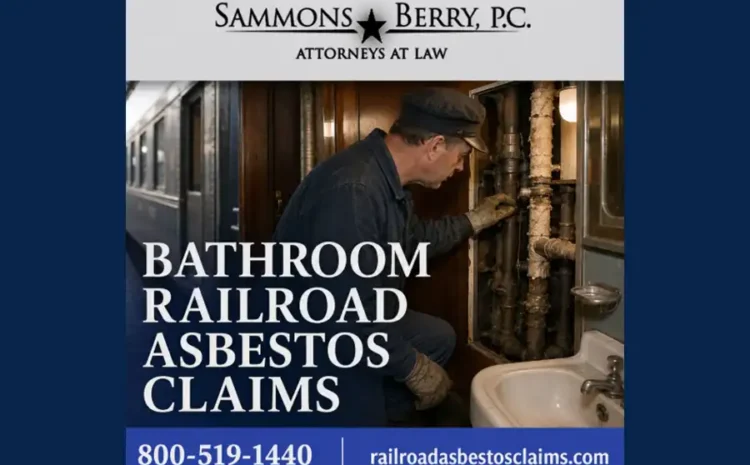
For decades, asbestos-containing products were used throughout the railroad industry because they resisted heat, fire, friction, and corrosion. Exposure was not necessarily limited to locomotive engines, brake systems, boilers, and railroad repair shops. Older passenger cars, cabooses, terminals, maintenance buildings, sleeping cars, and railroad bathroom facilities may also have contained asbestos materials.
Former railroad plumbers, pipefitters, carmen, maintenance workers, machinists, electricians, laborers, and other employees may have disturbed asbestos while repairing pipes, replacing fixtures, removing insulation, opening walls, or renovating bathroom and washroom areas.
If you worked around older railroad bathrooms or plumbing systems and were later diagnosed with mesothelioma, lung cancer, asbestosis, pleural disease, or another qualifying condition, you may be eligible to pursue Bathroom Railroad Asbestos Claims.
Was Asbestos Used Around Railroad Bathrooms?
Asbestos was incorporated into many industrial and construction products because it could tolerate heat and resist chemical damage. In older railroad equipment and facilities, potentially asbestos-containing materials may have been present around:
- Hot-water and steam pipes
- Pipe elbows and joints
- Boilers and water-heating equipment
- Plumbing insulation
- Wall and ceiling panels
- Floor tiles and backing materials
- Adhesives and mastics
- Gaskets, packing, and valves
- Cement board
- Fire-resistant doors and partitions
- Electrical insulation
- Heating equipment near washrooms
- Insulated mechanical spaces adjoining bathrooms
The presence of an older product does not automatically prove that it contained asbestos. Product identification, employment records, railroad documentation, coworker statements, equipment information, and other evidence may be necessary to establish where and how exposure occurred.
How Could Railroad Bathroom Work Release Asbestos?
Asbestos-containing material can become dangerous when it is cut, drilled, sanded, scraped, removed, crushed, or otherwise disturbed. These activities may release microscopic fibers into the surrounding air.
Railroad workers may have encountered airborne fibers while:
- Removing insulation from bathroom pipes
- Repairing steam or hot-water lines
- Replacing toilets, sinks, or other fixtures
- Opening walls to access plumbing
- Cutting old wallboard or cement panels
- Removing floor tiles and adhesive
- Replacing gaskets or valve packing
- Cleaning dust after repairs
- Renovating older passenger cars or cabooses
- Working near other employees disturbing asbestos products
Workers did not have to install asbestos products personally to experience exposure. A plumber, electrician, carman, or laborer working nearby could have inhaled fibers released by someone else’s work. Dust could remain in enclosed spaces, settle on tools and clothing, or be disturbed again during cleanup.
The National Cancer Institute explains that disturbing asbestos-containing products can release tiny fibers into the air. When inhaled, those fibers may become trapped in the lungs and remain there for a long time. Read the NCI’s asbestos exposure and cancer risk fact sheet for additional health information.
Railroad Employees Who May Have Been Exposed
Bathroom and plumbing-related exposure may have affected more than workers with “plumber” in their job title. Railroad employees frequently performed overlapping duties or worked in the same enclosed areas.
Potentially exposed occupations may include:
- Railroad plumbers and pipefitters
- Carmen and car repair workers
- Machinists
- Boilermakers
- Electricians
- Maintenance-of-way employees
- Shop laborers
- Station and terminal maintenance workers
- Insulators
- Welders
- Steamfitters
- Custodial and cleanup workers
- Passenger-car maintenance crews
- Apprentices and helpers
- Supervisors who entered active work areas
Exposure may have occurred inside locomotives, passenger cars, sleeping cars, dining cars, cabooses, railroad shops, roundhouses, terminals, office buildings, and other railroad-owned facilities.
Diseases Associated With Asbestos Exposure
Asbestos exposure has been associated with serious malignant and nonmalignant diseases. These conditions may include:
Mesothelioma
Mesothelioma is a cancer affecting the tissue lining the chest, abdomen, or other organs. Asbestos exposure is its major recognized risk factor. Symptoms can include shortness of breath, persistent chest pain, coughing, fatigue, and unexplained weight loss.
Lung Cancer
Occupational asbestos exposure can increase the risk of lung cancer. Smoking and asbestos exposure together can create a particularly serious lung-cancer risk, although smoking does not cause mesothelioma.
Asbestosis
Asbestosis is a chronic lung disease caused by inhaling asbestos fibers. The resulting inflammation and scarring can make breathing increasingly difficult.
Pleural Disease
Asbestos exposure can cause pleural plaques, pleural thickening, or pleural effusions. These conditions affect the membranes surrounding the lungs and may be identified through medical imaging.
Other Asbestos-Related Cancers
Asbestos exposure has also been associated with cancers of the larynx and ovary. Every diagnosis and exposure history must be evaluated individually by qualified medical and legal professionals.
Why Symptoms May Appear Decades Later
One of the most difficult aspects of an asbestos-related disease is its long latency period. A former railroad worker may have retired many years before symptoms or abnormalities appear.
The National Cancer Institute reports that it can take approximately 10 to 40 years or longer for symptoms of an asbestos-related condition to develop. This delay can make it difficult for workers and families to connect a recent diagnosis with railroad employment that occurred decades earlier.
A worker who repaired bathrooms, pipes, boilers, or passenger cars in the 1950s, 1960s, 1970s, or early 1980s may only recently have received a diagnosis. The passage of time does not necessarily eliminate the possibility of pursuing compensation, but legal deadlines can apply once a disease is diagnosed or a person dies.
What Compensation May Be Available?
Depending on the worker’s employment history, diagnosis, product exposure, location, and other circumstances, several potential sources of compensation may need to be investigated.
These may include:
- Asbestos bankruptcy trust claims
- Claims involving manufacturers or suppliers of asbestos products
- Railroad occupational-injury claims
- Wrongful-death claims
- Other claims available under applicable state or federal law
Many companies that manufactured asbestos products entered bankruptcy and established trust funds to compensate qualifying individuals. A former railroad employee may qualify for more than one trust if the worker encountered products connected to multiple manufacturers.
Visit the firm’s railroad asbestos claims information page to learn more about the claims process and potential eligibility.
What Evidence Can Support a Claim?
A successful claim generally requires more than a diagnosis. The claimant may also need evidence connecting the disease to occupational asbestos exposure and particular products, work locations, or companies.
Helpful information may include:
- Railroad employment records
- Railroad name and work locations
- Job titles and departments
- Dates of employment
- Union records
- Social Security employment history
- Names of shops, roundhouses, terminals, or rail yards
- Locomotive, passenger-car, or caboose assignments
- Plumbing and maintenance duties
- Names of coworkers and supervisors
- Product names, packaging, or manufacturer information
- Medical records and pathology reports
- Death certificates
- Photographs, equipment records, or work orders
Do not assume that a claim is impossible because you cannot remember every product name. Experienced railroad asbestos attorneys may use historical product records, railroad documents, job-site information, and testimony from other workers to investigate possible exposure sources.
Questions to Ask About Railroad Bathroom Exposure
Former workers and their families can begin reconstructing an exposure history by considering several questions:
- Which railroad employed you?
- During which years did you work there?
- What job titles did you hold?
- Did you work in passenger cars, sleeping cars, cabooses, terminals, shops, or maintenance buildings?
- Did you repair sinks, toilets, pipes, valves, boilers, or hot-water systems?
- Did you remove or work near pipe insulation?
- Did you cut wall panels, floor tiles, or cement board?
- Did coworkers create visible dust during repairs?
- Did you clean work areas after maintenance?
- Did you wear dusty work clothing home?
- Have you been diagnosed with an asbestos-related disease?
- Has a former coworker received a similar diagnosis?
These details can help an attorney evaluate whether additional investigation is appropriate.
Is There a Safe Level of Asbestos Exposure?
OSHA states that there is no safe level of occupational exposure to any type of asbestos fiber and that every occupational exposure contributes to the risk of developing an asbestos-related disease. Its asbestos safety and exposure overview also describes workplace measures intended to control airborne fibers.
Not every exposed worker develops an asbestos-related illness. Risk may be affected by the amount and duration of exposure, the type of asbestos fiber, the source of exposure, smoking history, and individual medical factors.
Do Railroad Asbestos Claims Require a Lawsuit?
Not every asbestos claim requires a trial or courtroom appearance. Some qualifying claims can be submitted to asbestos bankruptcy trusts through an administrative process.
Other cases may involve litigation, particularly when compensation is sought from a solvent company or through another legal remedy. The appropriate process depends on the worker’s employment history, diagnosis, product exposure, and available defendants or trust funds.
An attorney should explain:
- Which potential claims are available
- What evidence is required
- Whether litigation may be necessary
- What deadlines apply
- How legal fees and expenses are handled
- What the claimant can expect during the process
No attorney can guarantee a particular recovery. Compensation varies according to the facts, evidence, diagnosis, responsible entities, and rules governing each claim.
What Should You Do After an Asbestos-Related Diagnosis?
If you or a family member worked for a railroad and received an asbestos-related diagnosis, consider taking these steps:
- Follow the recommendations of your medical team.
- Tell your physician about the complete railroad work history.
- Obtain copies of pathology reports and imaging records.
- Write down employers, job titles, work locations, and dates.
- List the types of equipment and materials encountered.
- Identify former coworkers who may remember the work.
- Preserve employment, union, military, and Social Security records.
- Avoid discarding old photographs, documents, or work materials.
- Speak with an attorney familiar with railroad asbestos exposure.
- Do not delay, because filing deadlines may apply.
Why Experience With Railroad Exposure Matters
Railroad asbestos cases can involve employment records dating back several decades, changing job titles, missing product information, multiple work locations, and several possible sources of compensation.
An attorney handling these cases may need to:
- Reconstruct the worker’s occupational history
- Identify potential asbestos products and manufacturers
- Review medical evidence
- Match work history with established exposure records
- Determine which asbestos trusts may apply
- Evaluate other legal claims
- Track different filing requirements and deadlines
- Coordinate claims involving several responsible entities
Sammons & Berry, P.C. represents railroad workers and families affected by occupational asbestos exposure throughout the United States. The firm offers free initial consultations and handles qualifying cases on a contingency-fee basis, meaning attorney fees are collected from a recovery rather than charged upfront.
Request a Free Railroad Asbestos Claim Evaluation
If you repaired or worked around bathrooms, washrooms, plumbing systems, insulated pipes, boilers, or related equipment during railroad employment, your exposure history deserves careful review.
A diagnosis of mesothelioma, lung cancer, asbestosis, pleural disease, or another asbestos-related condition may support one or more claims. Family members may also have options when a former railroad worker has died.
Call Railroad Asbestos Claims at 800-519-1440 or complete the free railroad asbestos claim evaluation form to find out whether you may qualify.
This article is provided for general informational purposes and does not constitute legal or medical advice. Prior results do not guarantee a similar outcome. Claim availability and filing deadlines depend on the specific facts and applicable law.